Lake Bogoria National Reserve lies within Kenya's Great Rift Valley, a region defined by its towering escarpments and a chain of alkaline soda lakes. This 107-square-kilometre protected area is distinguished by extreme geothermal activity and its function as a critical feeding ground for one of the world's most significant populations of Lesser Flamingos.
Overview
Name
Lake Bogoria National Reserve
Type
Lake
Town
Marigat
County
Baringo
Country
Kenya
A Geothermal Wonderland in the Great Rift Valley
Lake Bogoria National Reserve is a designated UNESCO World Heritage Site and a Ramsar site, recognised for its international importance as a wetland. The reserve's principal features are the highly alkaline lake itself, which supports dense blooms of the blue-green algae flamingos consume, and its potent geothermal system. This system includes numerous hot springs and Africa's highest concentration of true geysers, creating a stark and steaming environment along the lake's western shore.
Exploring the Geography and Location of Lake Bogoria
The reserve's unique ecology is a direct product of its specific location within the Great Rift Valley, a vast geological trench stretching through Africa. This positioning dictates everything from its water chemistry to the intense geothermal forces that shape its shores and sustain its specialised wildlife.
Where Lake Bogoria is Located in Kenya
Lake Bogoria is situated in Baringo County, approximately 240 kilometres north-west of Nairobi. It rests in a trough of the Great Rift Valley, framed by the Ngatiol Escarpment to the west and the Siracho Escarpment to the east. The lake is long and narrow, with its highly saline and alkaline waters creating an environment inhospitable to fish but perfect for the microorganisms that form the base of its food chain.
The Great Rift Valley Geothermal Activity
The reserve's intense geothermal character is a direct result of its position within an active continental rifting zone. Tectonic activity allows underground water to contact heated rock, forcing it to the surface. This process manifests as over 200 hot springs and at least 18 geysers that erupt periodically. The most active area is the Loburu Hot Springs, where water temperatures can reach up to 99°C, releasing immense plumes of steam into the air.
Signature Wildlife of Lake Bogoria National Reserve
While the geothermal spectacles are a primary attraction, the reserve's unique ecosystem supports a specialised array of wildlife. The most notable inhabitants include a vast avian population and a famously elusive antelope, making wildlife viewing a key part of any visit.
The Iconic Lesser and Greater Flamingos
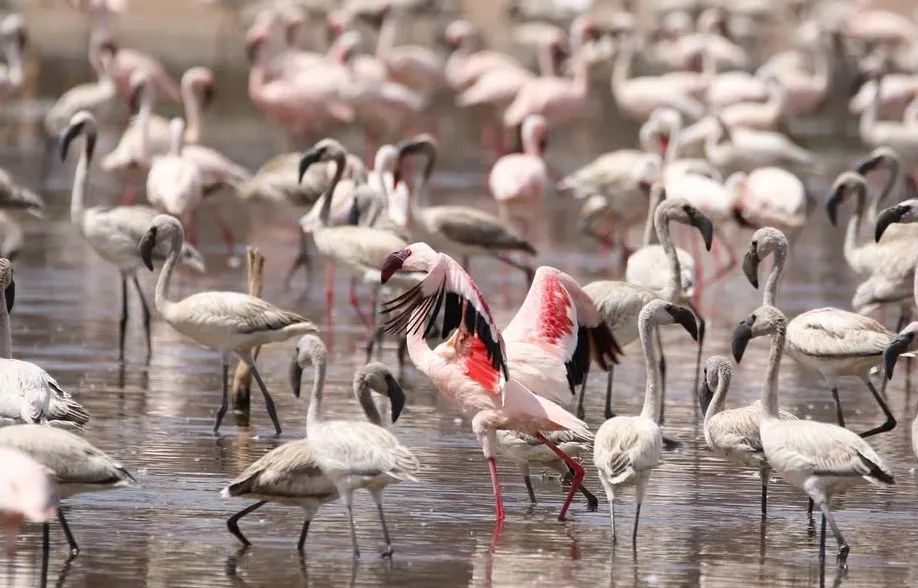
The main biological attraction at Lake Bogoria is its flamingo population. During peak periods, the lake can host up to 1.5 million Lesser Flamingos, creating a dense, shifting curtain of pink along its shoreline. These birds are specialist feeders, consuming vast quantities of the cyanobacteria (Spirulina platensis) that thrive in the alkaline water. Smaller numbers of Greater Flamingos are also present, identifiable by their larger size and lighter pink plumage.
Spotting the Elusive Greater Kudu
Lake Bogoria National Reserve holds one of Kenya’s most stable and visible populations of the Greater Kudu. This large, handsome antelope with its impressive spiral horns is notoriously shy, but the acacia woodlands and scrub surrounding the lake provide a reliable habitat. Guided walks specifically to track Kudu are a key activity for visitors seeking this rare sighting.
Other Fascinating Wildlife Around Lake Bogoria
While flamingos and Kudu are the primary draws, the reserve supports a variety of other species adapted to the harsh environment. The surrounding terrain provides habitat for numerous mammals and reptiles.
Primates: Olive Baboons and Patas Monkeys are commonly seen, particularly near the main gate and campsites.
Small Antelopes: The rocky escarpments are ideal for Klipspringers, while Kirk’s Dik-dik are frequent in the dry bushland.
Reptiles: Monitor Lizards are often found near the hot springs, using the geothermal heat to regulate their body temperature.
Birdlife: Beyond flamingos, African Fish Eagles and Marabou Storks are common predators along the shoreline.
Travel and Access to Lake Bogoria National Reserve
Reaching the reserve is straightforward via road from Nairobi, with options for charter flights to a nearby airstrip for those on a tighter schedule. A suitable vehicle is essential for navigating within the park's boundaries and accessing key viewpoints.
Flights to Kenya and Local Airstrips for Lake Bogoria
International visitors typically arrive at Jomo Kenyatta International Airport (NBO) in Nairobi. From Nairobi, charter flights can be arranged from Wilson Airport to the Lake Baringo Airstrip. This airstrip serves the wider Baringo region, and from there, a road transfer of about one hour is required to reach Lake Bogoria.
Driving from Nairobi to Lake Bogoria
The road journey from Nairobi takes between four and five hours. The standard route follows the A104 highway north towards Nakuru. Before entering Nakuru town, a turn onto the B4 road leads north to the town of Marigat. From Marigat, the C55 road provides direct access to the reserve's main entrance.
Getting Around Within Lake Bogoria National Reserve
A 4x4 vehicle is strongly recommended for a visit. While the main road tracing the western shoreline is tarmac, accessing specific viewpoints and navigating the dirt tracks within the reserve requires a high-clearance, all-wheel-drive vehicle, especially after any rainfall.
Loboi Gate as the Main Entry Point
The primary access point into Lake Bogoria National Reserve is Loboi Gate, located at the northern end of the lake. All entry fees and vehicle permits are processed here before visitors proceed into the reserve.
Best Time to Visit Lake Bogoria National Reserve
Visiting seasons are primarily defined by Kenya's dry and wet periods, which directly influence road conditions, wildlife concentrations, and the overall visitor experience. Timing your trip correctly enhances the quality of wildlife sightings and accessibility.
Optimal Dry Seasons for Flamingo Viewing
The best periods to visit are during the main dry seasons: June to October and January to February. During these months, the weather is generally clear, road conditions are optimal, and lower water levels tend to concentrate the flamingo flocks for more impactful viewing. Other wildlife is also easier to spot in the thinned-out vegetation.
Wet Season Considerations
The wet seasons occur from March to May (long rains) and November to December (short rains). Travel during these times is possible but can be affected by muddy tracks. Flamingo numbers can fluctuate as they may disperse to other Rift Valley lakes. Very high water levels can also submerge some of the hot springs, though this is not a common occurrence.
Practical Tips for Australian Travellers
For visitors from Australia, planning a trip to Kenya involves specific considerations regarding long-haul travel, health precautions, and timing with local holiday periods to ensure a well-organised and safe journey.
Long Haul Flights from Australia to Kenya
There are no direct flights from Australian cities to Nairobi. Travel typically involves a connection through a major hub in the Middle East, such as Doha or Dubai. Total travel time, including layovers, usually exceeds 20 hours. A visit to Lake Bogoria is best incorporated into a wider Kenyan itinerary of 10 to 14 days to justify the long journey.
Planning Your Trip Around Australian School Holidays
Key Australian school holiday periods, such as the mid-year break (June-July) and the September break, coincide with Kenya's peak dry season. This alignment leads to high demand for flights and accommodation. To secure availability and better pricing, booking well in advance is essential for families planning to travel during these times.
Kenya Visa and Health Requirements for Australians
Australian citizens require an Electronic Travel Authorisation (eTA) to enter Kenya, which must be applied for and approved online well in advance of departure. A Yellow Fever vaccination is a mandatory entry requirement, and you must carry your international vaccination certificate. It is critical to consult a travel doctor or your local GP for advice on other recommended vaccinations and malaria prophylaxis before your trip.
Activities and Unique Experiences at Lake Bogoria
Beyond wildlife observation, Lake Bogoria offers several interactive experiences that connect visitors directly with its powerful geothermal landscape and unique setting. These activities provide a deeper appreciation of the forces that shape this environment.
Unique Geothermal Experiences
The main geothermal area provides a distinct visitor experience. It is possible to walk along designated paths between the boiling hot springs and erupting geysers. A popular activity is to purchase raw eggs from local vendors near the gate and cook them in the boiling spring water, a simple demonstration of the powerful geothermal forces just beneath the earth's surface.
Walking Safaris and Cycling Adventures
Lake Bogoria is one of the few Kenyan national reserves where guided walking is a designated activity. These walks, led by an armed ranger for safety, focus on the acacia woodlands in search of Greater Kudu and other wildlife. Cycling is also permitted on the main tarmac road that runs along the lake shore, providing a quiet and slow-paced way to observe the flamingos and surrounding scenery.
Photography Opportunities at Lake Bogoria
The reserve offers exceptional subjects for photography. The primary focus is the vast concentration of flamingos, which allows for powerful images of colour and scale. The steam rising from the geysers against the backdrop of the Rift Valley escarpment provides another dramatic subject, especially in the soft light of the early morning or late afternoon.
Combining Lake Bogoria with Other Kenyan Safaris
Lake Bogoria integrates logically into a safari circuit focused on the Great Rift Valley. It is often paired with visits to the nearby Lake Baringo for its different birdlife and boat trips, and Lake Nakuru National Park, known for its rhinos. For a longer itinerary, it can serve as a stop between the central highlands, like Aberdare National Park, and the more arid reserves of northern Kenya, such as Samburu National Reserve.
Lake Bogoria National Reserve at a Glance
This table provides key information for planning your visit. Park fees are set in USD and are subject to change; the AUD amounts are approximate and depend on the exchange rate at the time of your visit.
For optimal travel to Lake Bogoria National Reserve, the dry seasons of January to February and June to September offer the most favorable weather conditions. During these periods, expect consistently high temperatures, often exceeding 30°C, low humidity, and predominantly clear skies, ideal for game drives, walking excursions, and photography.