Buffalo Springs National Reserve provides a distinct safari experience in the semi-arid northern frontier of Kenya. The reserve is a core component of a larger ecosystem in Isiolo County, adjoining Samburu National Reserve to the north and Shaba National Reserve to the east. This entire conservation area is centred on the region's primary water source, the Ewaso Ny'iro River.
Overview
Name
Buffalo Springs National Reserve
Type
National Park
Town
Isiolo
County
Isiolo
Country
Kenya
Geography and Location of Buffalo Springs National Reserve
The character of Buffalo Springs is defined by its dry-country environment, low altitude terrain between 850 and 1,230 metres, and the vital water sources that sustain it. The Ewaso Ny'iro River separates the reserve from its Samburu counterpart, forming an open and contiguous wildlife area. A key administrative distinction is the reserve's management by the Isiolo County Council, unlike many of Kenya's other national parks which are run by the Kenya Wildlife Service.
The Ewaso Ny'iro River and Surrounding Ecosystem
The Ewaso Ny'iro River is the lifeline of this arid region. Its banks support a narrow but dense corridor of riverine forest, composed mainly of large Acacia elatior and doum palms. This strip of vegetation provides critical food and shelter for a variety of wildlife. It creates a stark contrast with the surrounding dry acacia-commiphora bushland and open scrub that dominates most of the reserve.
Crystal Clear Springs and Unique Lava Terraces
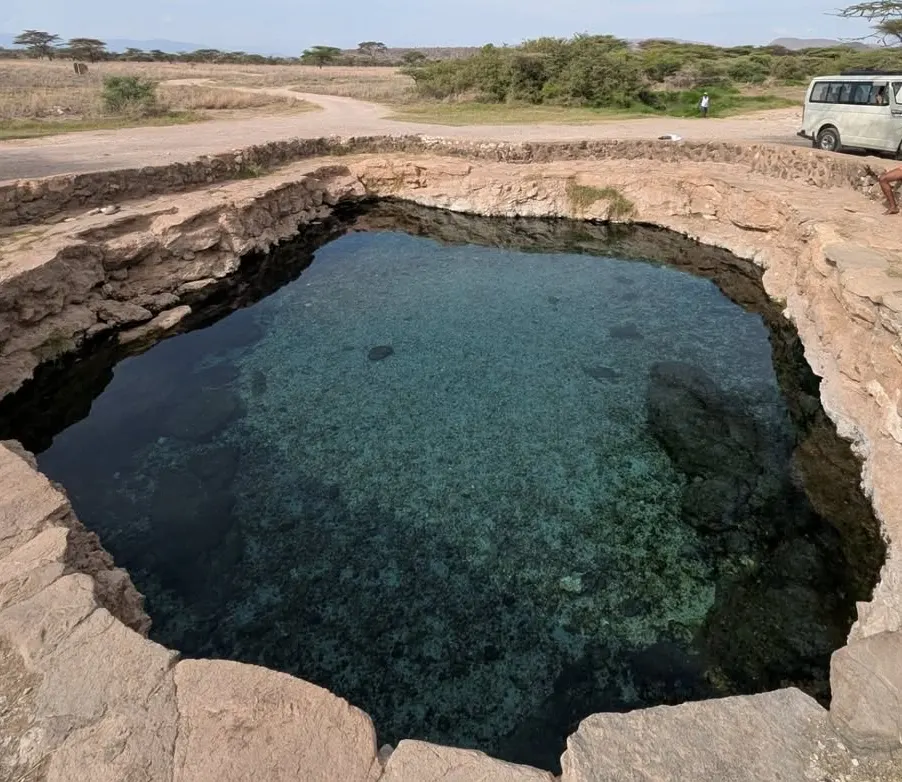
The reserve's name comes from a series of springs that provide permanent, clear water. One of the main pools, the Buffalo Springs, was inadvertently enlarged by a misdirected bomb during World War II, creating a permanent oasis that now attracts a high concentration of game. The terrain also features dark, ancient lava terraces and rocky outcrops, which provide excellent vantage points for predators like leopards.
Wildlife of Buffalo Springs National Reserve
Wildlife viewing in Buffalo Springs is focused on species specially adapted to arid environments. While elephants, impala, and various plains game are present, the reserve's main appeal is the opportunity to see animals not commonly found in the southern parks of Kenya. The dry landscape forces animals to congregate near the river and springs, often leading to rewarding game drives.
Spotting the Samburu Special Five
This reserve is a prime location for sighting the 'Samburu Special Five', a collection of unique northern species that thrive in these conditions. Game drives are specifically oriented towards locating these animals.
Grevy's Zebra: Larger than the common plains zebra, with finer, more numerous stripes that do not extend to the belly.
Reticulated Giraffe: Distinguished by its clearly defined, net-like pattern of deep red-brown patches separated by thin white lines.
Somali Ostrich: The males have distinctive blue-grey necks and legs, which differ from the pinkish tones of the common ostrich found further south.
Gerenuk: A long-necked antelope that often stands on its hind legs to browse on high branches, a unique behaviour among antelope species.
Beisa Oryx: A robust antelope with long, straight horns, well-adapted to surviving in hot, dry conditions.
Predators of the Reserve Leopard Cheetah and Wild Dog
The dense riverine forest along the Ewaso Ny'iro is a reliable habitat for leopards, which use the large acacia and fig trees for cover and as vantage points. Cheetahs are more frequently seen on the open plains and lava terraces. The region is also a known corridor for nomadic packs of African wild dogs, though sightings are infrequent and considered a significant highlight for any safari.
Birdwatching in Buffalo Springs with Over 450 Species
Buffalo Springs is an excellent birding destination with over 450 recorded species. The combination of riverine and dry-country habitats attracts a wide variety of birdlife. Key sightings include the large Vulturine Guineafowl, Martial Eagles, and species endemic to the north like the Somali Bee-eater, Taita Fiscal, and Pygmy Batis.
Accessing Buffalo Springs National Reserve from Australia
Access to Buffalo Springs from Nairobi is straightforward by either air or road. The choice between flying or driving depends on your overall itinerary structure, budget, and available time.
Flying into Samburu Oryx Airstrip
The most efficient way to reach the reserve is by a scheduled flight from Wilson Airport (WIL) in Nairobi. Airlines such as Safarilink and AirKenya Express operate daily flights to the Samburu Oryx Airstrip, with a flight time of approximately one hour. Upon arrival, a representative from your booked accommodation will meet you for the transfer into the reserve.
Road Trip from Nairobi in a 4x4 Vehicle
The drive from Nairobi covers approximately 320 kilometres and takes between five to six hours. The route follows the A2 highway, which is tarmacked past Isiolo town. While the main road is in good condition, a 4x4 vehicle is essential for game drives within the reserve, as the internal tracks are unpaved, sandy, or rough in sections.
Entering via the Ngare Mare Gate
The primary point of entry for Buffalo Springs is the Ngare Mare Gate, located south of the Ewaso Ny'iro River. This is the official entrance where park fees are paid and vehicle access is controlled by the Isiolo County Council.
The Best Time to Visit Buffalo Springs for Australians
Timing a visit correctly is key to maximising wildlife viewing opportunities. The climate in this part of Kenya is dictated by two distinct dry and wet seasons.
Optimal Wildlife Viewing During Dry Seasons
The best periods for a visit are during the long dry season from June to October and the shorter dry season from December to March. During these months, vegetation is sparse, and animals are forced to congregate around the Ewaso Ny'iro River and the springs, making them much easier to locate and observe.
Aligning Your Trip with Australian School Holidays
For family travel, the Kenyan dry seasons align well with Australian school holiday periods. The June to July winter break in Australia corresponds with the peak dry season in the Samburu region, offering excellent conditions. The summer holidays from December to January also fall within a dry, favourable period for game viewing.
Practical Safari Tips for Australian Travellers
Planning a safari from Australia requires careful attention to documentation, health precautions, and budgeting for a smooth journey.
Essential Travel Documents and Vaccinations
Australian passport holders require an Electronic Travel Authorisation (eTA) to enter Kenya, which must be applied for online in advance of your travel date. It is critical to consult a travel doctor at least six to eight weeks before departure. A medical professional will advise on required vaccinations, such as Yellow Fever, and recommend appropriate malaria prophylaxis for the regions on your itinerary.
Budgeting Your Kenya Safari in Australian Dollars
Park entry fees are typically quoted and paid in US Dollars (USD). When budgeting, convert these costs into Australian Dollars (AUD) using a current exchange rate and account for potential fluctuations. International transaction fees on credit cards should also be factored into the overall cost.
Fee Type
USD Rate (Non-Resident Adult)
Notes
Park Entry (24 hours)
$70
Per person, per day.
Park Entry (Child)
$40
Ages 3-17 years.
Standard Vehicle Entry
KES 1,000
Paid in local currency (KES).
Long Haul Flights from Sydney Melbourne or Brisbane
Travel from Australia to Jomo Kenyatta International Airport (NBO) in Nairobi is a long-haul journey, usually taking over 24 hours including stopovers. Major airlines connect via hubs in the Middle East (e.g., Doha, Dubai) or Asia. It is advisable to allow a full day for rest in Nairobi upon arrival before proceeding on safari to recover from the flight.
Planning Your Buffalo Springs Safari Adventure
A visit to Buffalo Springs is best integrated into a wider Kenyan itinerary. This allows a traveller to fully appreciate its unique ecological qualities in contrast to other parks.
Crafting a Broader Kenya Safari Itinerary
A typical stay in the Samburu and Buffalo Springs ecosystem is two to three nights. This duration allows sufficient time for multiple game drives to find the Special Five and other wildlife. The trip can be combined with a visit to the Masai Mara for classic Big Five viewing or to Laikipia for different conservation-focused activities, creating a well-rounded journey that shows the diversity of Kenya's ecosystems.
Connecting with Samburu Borana and Turkana Communities
The region is the traditional homeland of the Samburu, Borana, and Turkana people. Many lodges can arrange visits to local communities that offer authentic insight into their pastoralist lifestyles, traditions, and the complex relationship between people and wildlife in this arid territory. These interactions provide a genuine cultural context to the safari.
A Safari Beyond the Big Five
Buffalo Springs provides an opportunity to shift the safari focus from the 'Big Five' checklist. It is a destination for travellers interested in ecological diversity, arid-land adaptations, and a collection of wildlife that defines northern Kenya. The safari here is about unique species, stark scenery, and a different rhythm to the more famous southern parks.
Accommodations in Buffalo Springs National Reserve
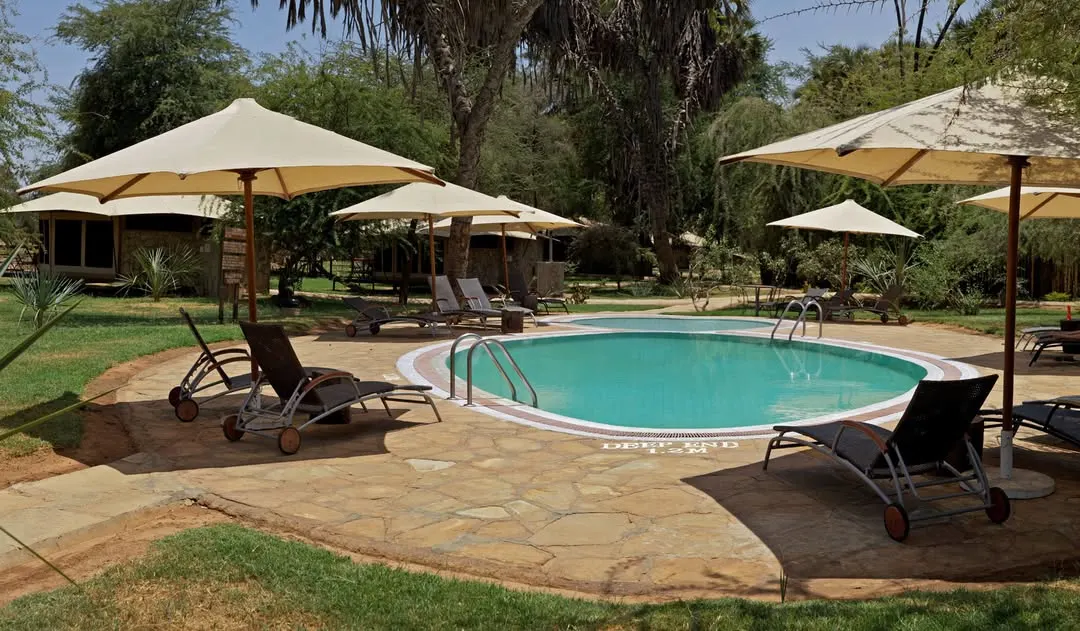
Buffalo Springs National Reserve offers a hot, semi-arid climate ideal for safari during its pronounced dry seasons. The best weather for maximizing comfort and wildlife viewing occurs from January to February and again from June to September.