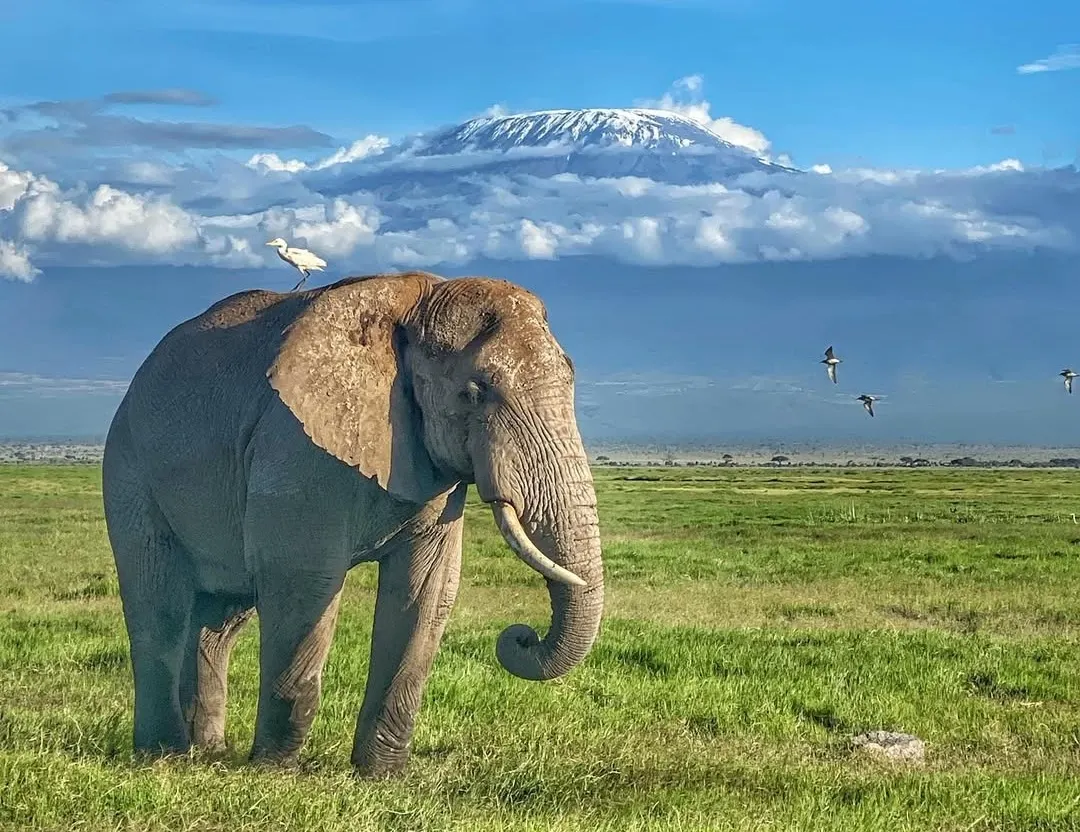
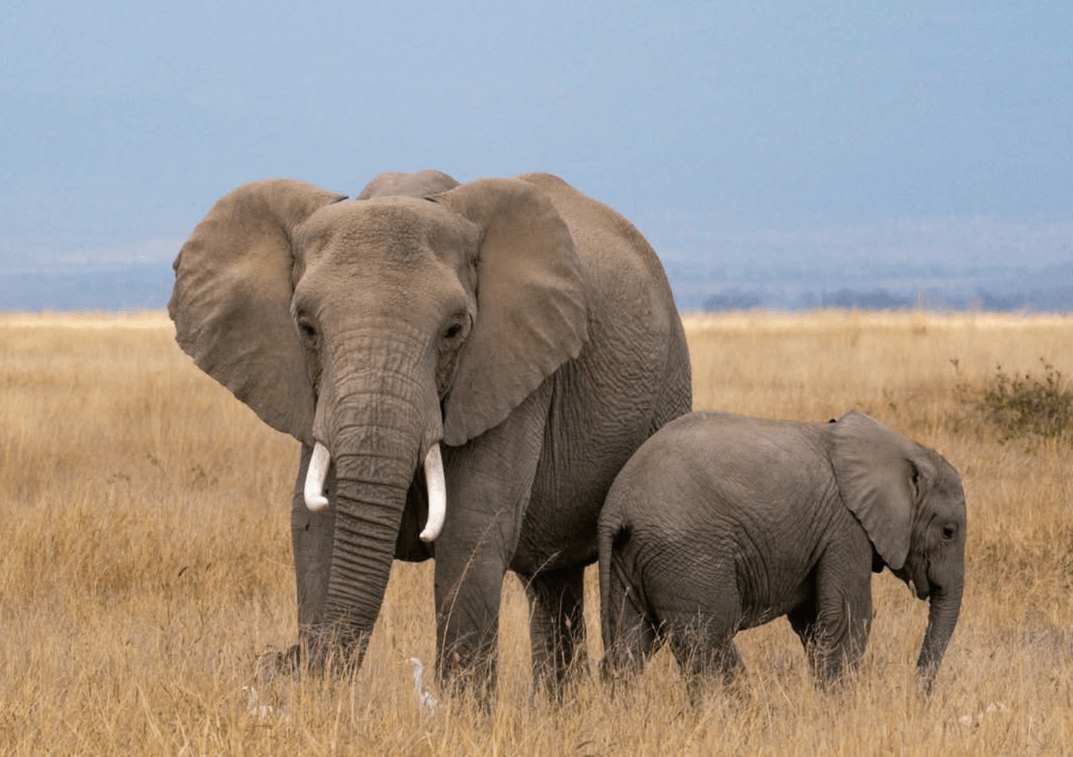
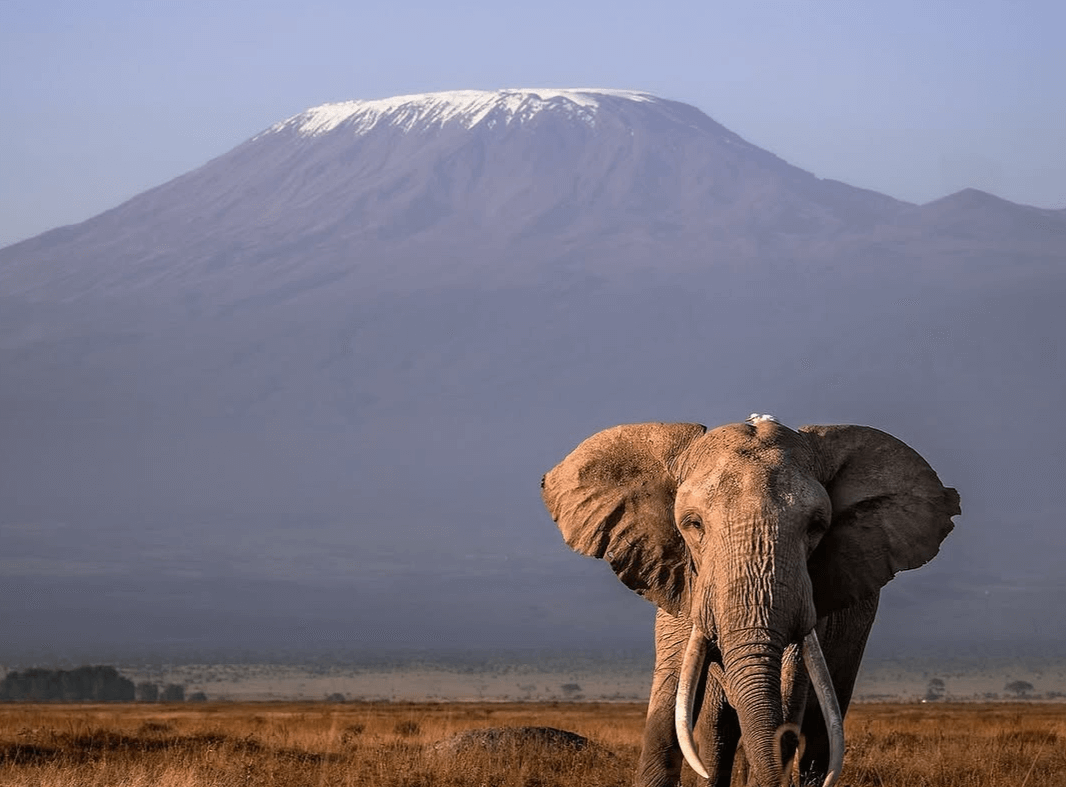
Amboseli National Park lies in southern Kenya, directly against the Tanzanian border, and stands as one of the country's most recognised safari destinations. The park is defined by three core features: its remarkable population of African elephants, a life-giving system of permanent swamps, and the direct, ground-level views it offers of Mount Kilimanjaro.
Overview
Name
Amboseli National Park
Type
National Park
Town
Kimana
County
Kajiado
Country
Kenya
The Geography and Climate of Amboseli National Park
The character of an Amboseli safari is shaped by its distinctive geography. A landscape of stark contrasts, the park contains arid, dusty plains adjacent to green, life-sustaining wetlands. This environment dictates wildlife movements and provides the dramatic scenery for which Amboseli is famous.
Amboseli's Unique Ecosystem and Alkaline Plains
Amboseli National Park covers 392 square kilometres at the centre of a much larger 8,000 square kilometre ecosystem that stretches across the border into Tanzania. A dry Pleistocene lake basin dominates the park's geology, resulting in a fine, alkaline dust that characterises the dry months. This arid environment creates a unique habitat when contrasted with the park's permanent wetlands, supporting a high concentration of resident and migratory wildlife.
Mount Kilimanjaro Views from Amboseli
Although Mount Kilimanjaro is in Tanzania, the most celebrated ground-level photographic views of its snow-capped peak are from within Amboseli National Park. Visibility is highly dependent on daily weather conditions. The clearest views typically occur in the early morning or late afternoon, just after sunrise or before sunset, when cooler air reduces atmospheric haze. The Green Season, following periods of rain, often provides the sharpest, most reliable views as the rains settle the pervasive dust.
The Permanent Swamps of Amboseli National Park
The survival of Amboseli's wildlife is entirely dependent on its permanent swamps, including the well-known Enkongo Narok and Olokenya marshes. These wetlands receive a continuous supply of underground water that originates as ice melt from Mount Kilimanjaro's distant summit. This naturally filtered water emerges in springs, creating clear pools and swamps that attract large herds of elephants, hippos, and water birds, even during the peak of the dry season.
A Guide to Wildlife Viewing in Amboseli National Park
The park's unusual combination of dry plains and permanent wetlands supports a rich and easily observable variety of animal life. While the elephants are the main attraction, Amboseli provides reliable sightings of classic East African plains game, numerous predators, and a high-density bird population, making it a comprehensive wildlife destination.
Amboseli's Iconic Elephants and Super Tuskers
Amboseli is renowned for its high density of free-ranging African bush elephants (*Loxodonta africana*). Decades of protection, spearheaded by the Amboseli Trust for Elephants, have resulted in a stable and habituated population with relaxed breeding herds. The park is one of the few places in Africa offering a genuine chance to see 'Super Tuskers', which are large bull elephants whose tusks each weigh over 45 kilograms. These magnificent animals, such as the famous bull named Tim who lived to the age of 50, are a direct result of long-term conservation success.
Plains Game Gatherings in Amboseli
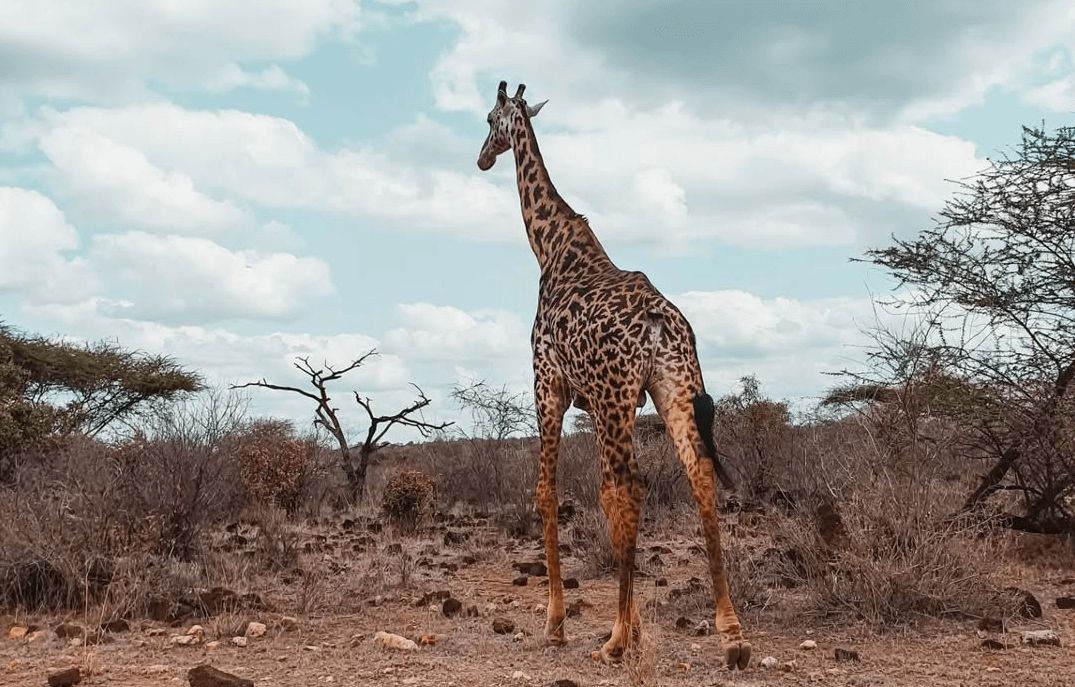
Large concentrations of plains animals are a constant feature of Amboseli, drawn to the permanent water and grazing provided by the swamps. You can expect reliable sightings of Burchell's zebra, wildebeest, Maasai giraffe, and both Grant's and Thomson's gazelles. Large herds of buffalo are also frequently seen moving between the marshes and the acacia woodlands.
Predators of Amboseli National Park
The primary predators in Amboseli are lions, spotted hyenas, and cheetahs. Lion prides are often found resting in the shade of acacia trees or near the swamp edges where prey is abundant. Cheetahs use the open plains for high-speed hunting, while spotted hyenas are a common sight, particularly in the early mornings and evenings. Leopards are resident in the park's woodlands but remain highly elusive and are not commonly sighted.
Birdwatching in Amboseli's Wetlands
The park's wetlands make it a designated Important Bird Area with over 400 recorded species. Birdwatching is productive year-round but peaks during the Green Season from November to May with the arrival of migratory species. Key species include Lesser and Greater Flamingos, Grey Crowned Cranes, and Great White Pelicans. The swamps also support numerous species of herons and egrets, waterfowl like the Egyptian Goose, and regional specials like the Taveta Golden Weaver.
Hippos in the Amboseli Swamps
Large pods of hippos are permanent residents of the Amboseli swamps. They spend the day submerged to regulate their body temperature, often with just their eyes and nostrils visible above the water. Observation Hill, a volcanic cone that is one of the few places in the park where you can alight from your vehicle, provides an excellent vantage point for viewing the hippos in the swamps below.
Getting to Amboseli National Park from Australia and Nairobi
The journey to Amboseli from Australia is a two-part process. The first stage is the long-haul international flight to Kenya's capital, Nairobi. From there, efficient domestic connections by air or road complete the final leg to the national park.
Long Haul Flights to Kenya from Australia
For Australian travellers, the trip to Kenya begins with a long-haul flight from a major city such as Sydney, Melbourne, or Perth. No direct flights are available. The most common routes involve a single connection through a hub in the Middle East, like Dubai, Doha, or Abu Dhabi. The arrival point in Kenya is Jomo Kenyatta International Airport (NBO) in Nairobi.
Flying to Amboseli from Nairobi Wilson Airport
The most efficient method to reach Amboseli from Nairobi is a scheduled light-aircraft flight. These services depart from Wilson Airport (WIL), a smaller airport in Nairobi dedicated to domestic safari routes. The flight time is approximately 35 minutes, landing at the Amboseli Airstrip inside the park. This option avoids Nairobi's road traffic and provides excellent aerial views of the Great Rift Valley.
Driving to Amboseli by Road from Nairobi
A road transfer from Nairobi to Amboseli in a 4x4 safari vehicle takes between four and five hours to cover the 240-kilometre distance. The route usually follows the main Nairobi-Mombasa highway to the town of Emali, before turning south onto a tarmac road towards the Kimana Gate. The final section of road leading into the park can be corrugated and dusty, especially in the dry season.
Train and Road Transfer to Amboseli via SGR
An alternative travel combination uses Kenya's Standard Gauge Railway (SGR). The Madaraka Express train runs from the Nairobi Terminus to Emali Station, a journey of about 90 minutes. From Emali Station, a pre-arranged road transfer of approximately 1.5 hours is required to reach the park. This option combines the speed of the train with a shorter road journey.
Transport Method
Departure Point (Nairobi)
Approx. Total Duration
Scheduled Flight
Wilson Airport (WIL)
35 minutes
Road Vehicle
Nairobi Hotel
4 - 5 hours
Train & Road Transfer
Nairobi SGR Terminus
Approx. 3 hours
Best Time to Visit Amboseli for Australian Travellers
Choosing when to visit Amboseli involves a trade-off between peak wildlife viewing and optimal photographic conditions. The park's two distinct seasons, the Dry Season and the Green Season, offer vastly different experiences, both of which align well with Australian holiday periods.
Dry Season Amboseli Wildlife Viewing
The main dry season runs from June to October. This period offers the most reliable wildlife viewing. The diminishing water in the surrounding plains forces animals to congregate in large numbers around the permanent swamps, making them easy to find. Sparse vegetation further improves visibility. The park, however, becomes exceptionally dusty, which can affect photographic clarity.
Green Season Amboseli Photography and Birdwatching
The Green Season occurs from November to May and is split by the short rains (November to December) and the long rains (April to May). During this time, the park is transformed by the rain, with new grass growth and significantly less dust. This is the optimal time for clear, sharp photographs of Mount Kilimanjaro. It is also the peak season for birdwatching due to the arrival of numerous migratory species.
Aligning an Amboseli Safari with Australian School Holidays
The Australian winter school holidays in late June and July fall squarely in the middle of Amboseli's prime dry season, making this an excellent time for a family safari focused on big game. The spring holidays in late September and early October also align with the dry season. The summer school holidays in December and January coincide with the short green season, which is ideal for photography and birding, with a chance of afternoon showers.
Practical Tips for Your Amboseli Safari from Australia
Careful planning around documentation, health, finances, and packing is essential for a successful safari from Australia. Attending to these details well in advance ensures a smooth and enjoyable trip.
Kenyan Electronic Travel Authorisation eTA for Australians
Australian citizens require an Electronic Travel Authorisation (eTA) to enter Kenya. Applications must be completed online via the official government portal well in advance of your departure date. An approved eTA is a mandatory requirement for boarding your international flight from Australia.
Health and Malaria Precautions for Amboseli
Amboseli is a malaria-risk area because of its permanent swamps. You must consult your GP or a specialised travel doctor in Australia at least six to eight weeks before your trip. Your doctor will advise on the most appropriate malaria prophylaxis, such as Malarone or Doxycycline, and any other recommended vaccinations. Using an effective insect repellent containing DEET and wearing long-sleeved shirts and trousers in the evenings are also critical protective measures.
Budgeting for an Amboseli Trip in Australian Dollars
While most safari packages, accommodation, and park fees are quoted in US Dollars (USD), you should budget for the entire trip in Australian Dollars (AUD). This budget must include international airfares from Australia, travel insurance, eTA fees, vaccinations, and any spending money for gratuities and souvenirs. Factoring in the AUD-to-USD exchange rate is a key part of financial planning.
What to Pack for an Amboseli Safari
Packing for Amboseli requires practical choices. Protecting camera equipment from the fine dust is a priority. Luggage restrictions on small internal flights are strict, usually limited to 15 kilograms per person in soft-sided bags.
Lightweight, layered clothing in neutral colours such as khaki, green, or brown
A warm fleece or jacket for cool early mornings and evenings
A wide-brimmed hat and high-SPF sunscreen
A dedicated pair of binoculars for each person
A camera with a good zoom lens and a dust cover or protective bag
Effective insect repellent with DEET
Any personal medications
Planning Your Amboseli Safari Itinerary
Amboseli is a cornerstone of many Kenyan safari circuits. Its proximity to Nairobi and excellent air connections allow it to be easily integrated into a wider itinerary, serving as either a starting point or a complement to other national parks and reserves.
Typical Amboseli Trip Length for Australians
For most Australian travellers on a broader Kenyan safari, a stay of two to three nights in Amboseli is sufficient. This duration allows for four to six game drives, providing ample opportunity to see the elephant herds, view Kilimanjaro, and experience the park's unique ecosystem. It fits logically into a typical 10-to-14-day total safari itinerary.
Combining Amboseli with Other Kenyan Parks
Amboseli combines well with several other destinations. It is often part of a 'Southern Circuit' itinerary that includes the vast Tsavo West National Park, which is accessible by road. Alternatively, after visiting Amboseli, many travellers fly back to Wilson Airport in Nairobi to connect with another flight north. Popular onward destinations include the Masai Mara National Reserve, Samburu National Reserve, or the private conservancies of Laikipia.
Amboseli's Elephant Conservation Success
A visit to Amboseli is an opportunity to witness one of Africa's great conservation achievements. The work of the Amboseli Trust for Elephants, founded by Dr. Cynthia Moss in 1972, has created a safe haven where elephants can live long, natural lives. The data collected by its researchers has been instrumental in understanding elephant behaviour and social structures, contributing significantly to conservation efforts across the continent.
Amboseli National Park Key Facts for Travellers
Attribute
Details
Location
Kajiado County, Southern Kenya
Park Area
392 square kilometres
Governing Body
Kenya Wildlife Service (KWS)
Primary Attraction
Large herds of elephants with Mount Kilimanjaro backdrop
For optimal safari conditions in Amboseli National Park during 2026, the dry seasons (January-February and June-October) are generally preferred. These periods offer excellent wildlife viewing as animals congregate around permanent water sources, easier road travel due to less mud, and significantly higher chances of clear, iconic Mount Kilimanjaro views, particularly at dawn and dusk.