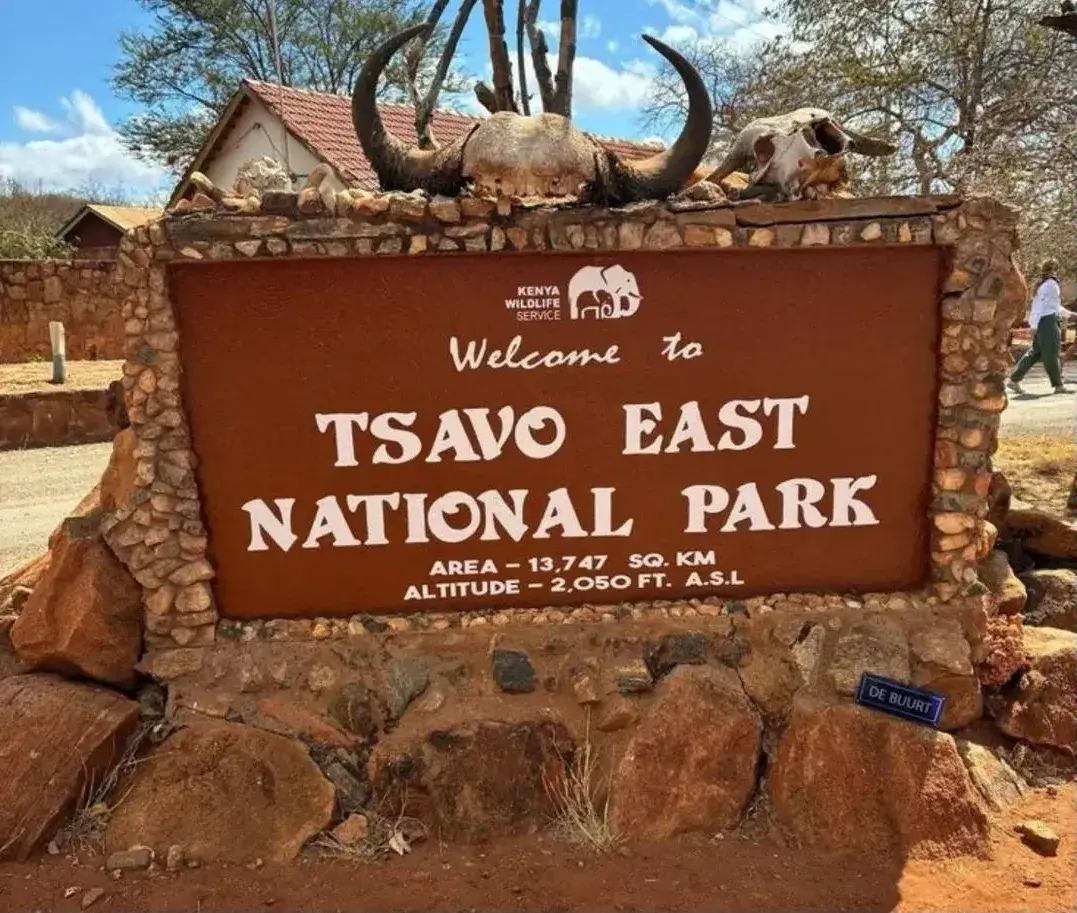
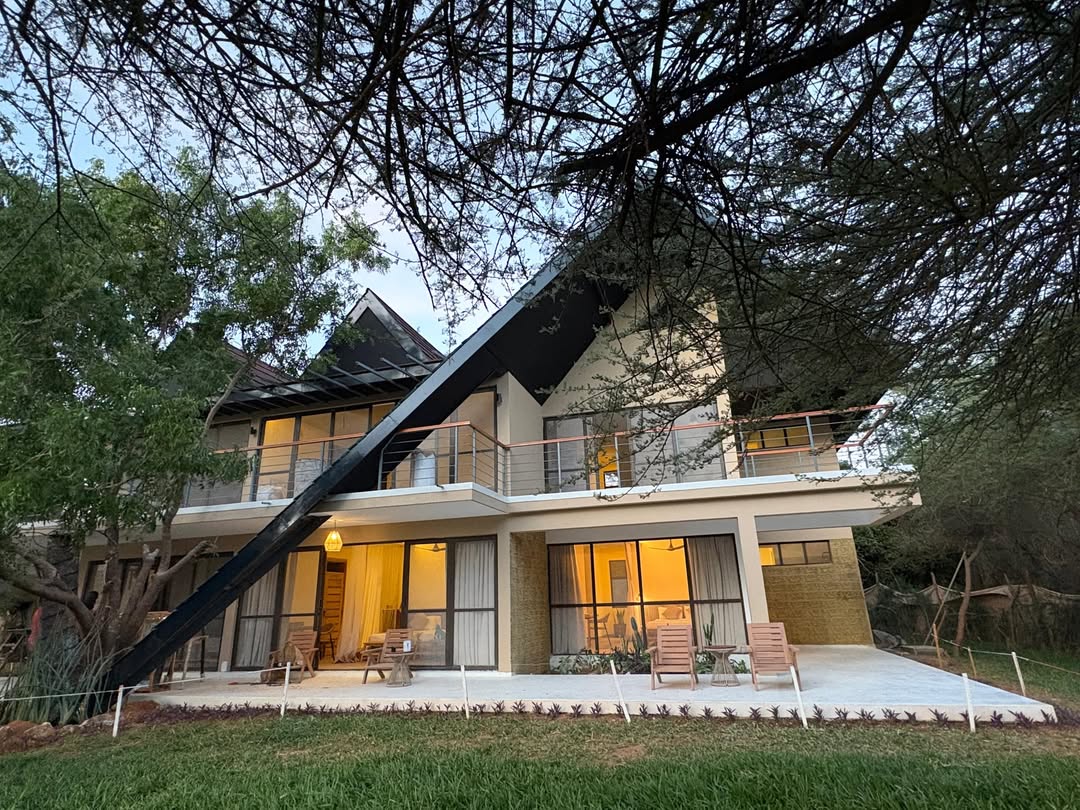
Tsavo East National Park is located in the semi-arid Taita Taveta County of southeastern Kenya, straddling the primary transport corridor between Nairobi and the coast. As one of Kenya's oldest and largest parks, established in April 1948 and covering 13,747 square kilometres, its character is defined by vast, flat plains, thorny scrubland, and the iconic red dust that coats its famous elephant herds.
Overview
Name
Tsavo East National Park
Type
National Park
Town
Voi
County
Taita Taveta
Country
Kenya
The Geography and Location of Tsavo East National Park
The park's immense size and unique geological features create a distinct safari environment. Its low-lying, arid terrain is shaped by ancient lava flows and bisected by the permanent Galana River, which provides a critical lifeline for the region's wildlife. This section details the key geographical elements and access points that define a visit to Tsavo East.
Location and Topography of Tsavo East
Tsavo East National Park covers a substantial area of southeastern Kenya, with the town of Voi on its southern boundary serving as a primary hub. The park's terrain is predominantly flat, open savanna and acacia scrub, a stark contrast to the highlands of central Kenya. This low-elevation, hot, and dry environment is characterised by its striking, iron-rich red soil. The permanent flow of the Galana River is the park's lifeblood, creating a vital water corridor for wildlife through the arid plains.
Key Natural Landmarks within Tsavo East
The Yatta Plateau
The Yatta Plateau forms a dramatic boundary along the western edge of Tsavo East. At approximately 290 kilometres long, it stands as the world's longest lava flow. It serves as a significant topographical feature, visible from many parts of the park and influencing the local ecosystem.
Galana River and Lugard Falls
The Galana River is the park's main water source, attracting large concentrations of wildlife, especially during the dry seasons. Further along its course, the river narrows and cascades through a series of rapids over stratified rock. This section, known as Lugard Falls, is a reliable location for observing crocodiles and hippos in their natural habitat.
Mudanda Rock and Aruba Dam
Mudanda Rock is a large, whale-backed inselberg that rises above the surrounding plains. The rock functions as a natural water catchment, feeding a dam at its base that is popular with elephants and other animals. Aruba Dam, a man-made reservoir constructed on the Voi River, is another crucial water point that attracts a high volume of water birds and congregating herds.
Getting to Tsavo East Main Access Gates
Voi Gate
Voi Gate functions as the main entrance to the park. Its location just a few minutes' drive from the town of Voi and the Voi SGR train station makes it the primary access point for visitors arriving by rail from Nairobi or Mombasa.
Bachuma Gate
Bachuma Gate is located on the main Nairobi-Mombasa highway (A109). It is the most logical entry point for safari vehicles conducting road transfers from Mombasa, Diani Beach, and the southern coastal region.
Sala Gate
Positioned on the park's eastern boundary, Sala Gate provides the most direct access from the northern coastal towns of Malindi and Watamu. Using this gate significantly shortens the road transfer time for itineraries combining a northern beach stay with a Tsavo East safari.
Tsavo East is celebrated for its large mammal populations and unique 'dry country' species adapted to the harsh, arid conditions. The park offers a different wildlife viewing experience to other Kenyan reserves, highlighted by its famous red elephants and distinctive maneless lions. The open terrain and concentration of animals around water sources make for rewarding game drives.
Spotting Tsavo East's Iconic Red Elephants
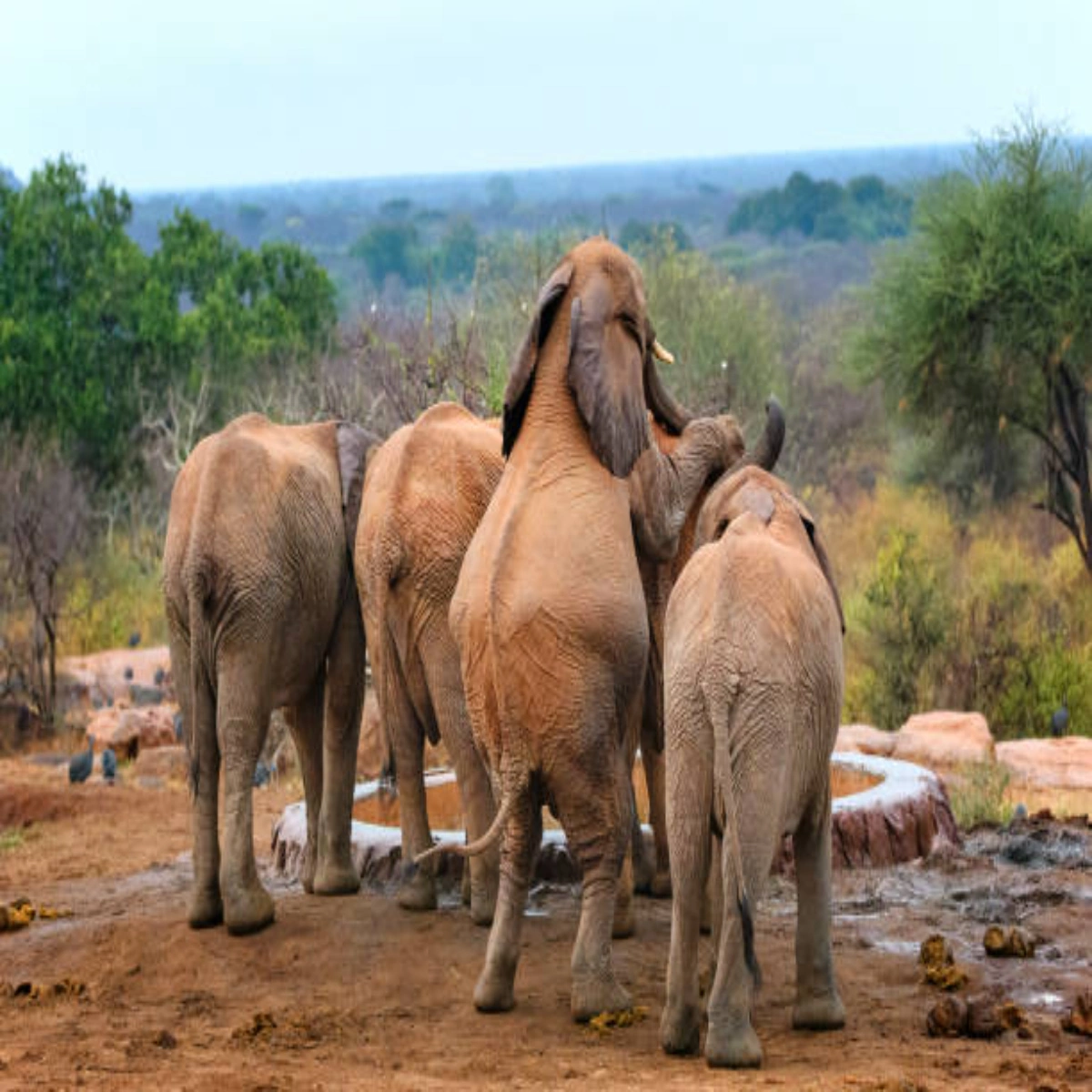
Tsavo East National Park is renowned for its large population of elephants, which currently number over 12,000. These animals are often referred to as 'Red Elephants' due to their habit of dusting themselves with the park's distinctive, iron-oxide-rich red soil. This practice protects their skin from the sun and insects, giving them a memorable brick-red appearance against the scrubland.
Encountering Tsavo East's Big Five and Maneless Lions
Visitors can regularly sight four of the Big Five: elephant, lion, leopard, and buffalo. Large herds of buffalo are a common feature of the plains. Black rhinos are extremely rare in Tsavo East and are more reliably seen within the protected sanctuary in the adjacent Tsavo West National Park. A unique characteristic of the park is its population of male lions, which often have very sparse or no manes. This trait is considered a biological adaptation to the high temperatures and thorny vegetation of the region.
Unique Dry Country Antelopes in Tsavo East
Gerenuk the Giraffe Necked Antelope
The gerenuk is a long-necked antelope adapted to arid environments. It is frequently seen standing on its hind legs, using its elongated neck to browse on acacia bushes and trees that are out of reach for other antelope species.
Fringe eared Oryx
The fringe-eared oryx is a striking, large antelope with long, straight horns. It is well-adapted to survive in hot, dry conditions and can often be seen in the open plains of Tsavo East.
The Critically Endangered Hirola
A small, translocated population of the critically endangered Hirola, also known as the Hunter's Hartebeest, exists within a fenced, protected sanctuary in the eastern part of the park. While sightings are not guaranteed, their presence is of high conservation significance.
Birdwatching Opportunities in Tsavo East
Tsavo East National Park supports over 500 recorded bird species, providing excellent birdwatching opportunities. The park is home to dry-country specials such as the Somali Ostrich and Vulturine Guineafowl, as well as numerous birds of prey. The riverbanks and waterholes like Aruba Dam attract a high density of water birds, particularly during the European winter months when migratory species are present.
Crocodiles of the Galana River
The Galana River supports a substantial population of Nile crocodiles. They are a common sight, often seen basking in large numbers on the sandbanks. The area around Lugard Falls is a particularly reliable spot for viewing these large reptiles.
Accessing Tsavo East National Park from Australia
For Australian travellers, Tsavo East's strategic location presents a highly efficient and cost-effective safari option. Its accessibility via both road and modern rail from Kenya's two major international airports eliminates the need for expensive domestic flights, making it an easy addition to a wider Kenyan itinerary. This section outlines the primary travel methods for reaching the park.
Long Haul Flights from Australia to Kenya
Flights to Nairobi Jomo Kenyatta International Airport
Most Australian travellers fly into Jomo Kenyatta International Airport (NBO) in Nairobi. Major carriers operate routes from Sydney, Melbourne, Perth, and Brisbane, typically with one stopover in the Middle East, such as Doha or Dubai.
Flights to Mombasa Moi International Airport
For itineraries focused on a combined coastal and Tsavo safari, flying into Moi International Airport (MBA) in Mombasa is a practical alternative. This approach eliminates the need for an initial transfer from Nairobi, placing travellers in immediate proximity to both beach resorts and the park.
Travel to Tsavo East from Nairobi by SGR Train
The Madaraka Express Standard Gauge Railway (SGR) is the most efficient and comfortable transport from Nairobi to Tsavo East. The train journey from the Nairobi Terminus to Voi Station takes approximately four hours. Safari vehicles meet clients directly at Voi Station for the short transfer to the Voi Gate.
Reaching Tsavo East from the Kenyan Coast
SGR Train from Mombasa to Voi
The SGR train provides a fast connection from the coast. The journey from the Mombasa Terminus to Voi Station is under two hours, making a day trip or short safari highly feasible from Mombasa-based hotels.
Road Transfers from Diani and Mombasa
Road transfers from Diani Beach and Mombasa are common. A 4x4 safari vehicle journey typically takes between two and three hours to reach the Bachuma Gate, depending on traffic conditions leaving the city.
Road Transfers from Malindi and Watamu
For travellers based in Malindi or Watamu, a road transfer is the standard option. The journey to the Sala Gate is direct and generally takes around two to three hours.
Approximate Travel Times to Tsavo East National Park
Origin
Travel Method
Approximate Time
Nairobi
SGR Train to Voi
4 hours
Mombasa
SGR Train to Voi
Under 2 hours
Diani Beach
Road Transfer
2-3 hours
Malindi
Road Transfer
2-3 hours
Why Tsavo East Offers Cost Effective Safari Access
A key logistical advantage of Tsavo East for Australian travellers is its accessibility via road or rail. This avoids the need for expensive domestic flights, which are often required for safaris to more remote locations like the Masai Mara or Samburu. The saving on internal airfares makes a Tsavo East safari a very cost-effective component of a wider Kenyan holiday.
The Best Time to Visit Tsavo East National Park
Choosing the right time to visit Tsavo East depends on balancing wildlife viewing priorities with climate considerations and Australian holiday schedules. The park's distinct dry and wet seasons dramatically alter the environment, each offering unique advantages for game viewing, birdwatching, and photography.
Optimal Dry Seasons for Wildlife Viewing June to October
The long dry season from June to October is the peak time for wildlife viewing in Tsavo East. The vegetation thins out, and animals are forced to congregate around the few permanent water sources, such as the Galana River and Aruba Dam, making them easier to locate. Weather conditions are generally clear and sunny during this period.
Aligning Tsavo East Safaris with Australian School Holidays
The prime June to October viewing season aligns favourably with the mid-year winter school holidays in Australia, making it an ideal time for family travel. The January to February dry season corresponds with the Australian summer holidays. Planners should note that these are the hottest months in Tsavo, with very high daytime temperatures.
Wet Season Birdwatching and Green Scenery
The short rains from November to December and the long rains from March to May transform the park. The environment becomes green, and dust levels are significantly lower. While wildlife can be harder to spot in the thicker vegetation, this period is exceptional for birdwatching, with the arrival of numerous migratory species from Europe and northern Africa.
Understanding the Climate and Heat in Tsavo East
Tsavo East National Park is located at a low altitude and is hot and dry for most of the year. Daytime temperatures frequently exceed 30°C, particularly from January to March. Humidity can be high, especially just before and during the rainy seasons. The heat is an important factor to consider when planning game drive schedules and daily activities.
Practical Information for Australian Travellers in Tsavo East
A successful safari from Australia requires careful preparation, from securing the correct travel documents to understanding local health and safety protocols. This section provides essential advice tailored for Australians planning a trip to Tsavo East National Park, covering visas, health, currency, and safety in the bush.
Australian Visa Requirements for Kenya
Australian passport holders are required to obtain an electronic travel authorisation (eTA) prior to arriving in Kenya. Applications must be made online through the official Government of Kenya portal well in advance of the travel date. It is no longer possible to get a visa on arrival.
Essential Health and Vaccination Advice for Tsavo East
Pre-travel medical consultation is essential for any trip from Australia to Kenya. Tsavo East's low altitude and hot climate create conditions for mosquito-borne illnesses.
Consult an Australian GP or specialist travel clinic 6-8 weeks prior to departure.
Malaria prophylaxis is strongly recommended as Tsavo East is a high-risk malarial area.
Check the current Yellow Fever vaccination requirements; proof of vaccination may be mandatory for entry depending on your transit countries.
Ensure all routine vaccinations, such as tetanus and hepatitis, are up to date.
Currency and Budgeting Your Tsavo East Safari in AUD
The official currency is the Kenyan Shilling (KES), but the United States Dollar (USD) is widely used for tourism services, including park fees, tips, and accommodation. It is practical for Australian travellers to budget in USD for major costs and convert these to AUD for planning purposes. Having a small amount of KES for minor purchases and gratuities is advisable.
Hydration and Sun Safety in the Tsavo East Climate
The intense sun and heat in Tsavo East make dehydration and sun exposure significant risks. It is critical to drink plenty of bottled water throughout the day. A wide-brimmed hat, sunglasses, and high-SPF sunscreen are essential items for all game drives and outdoor activities.
Planning Your Tsavo East Safari from Australia
Tsavo East's unique characteristics make it an excellent fit for specific types of Australian travel itineraries. Its accessibility and distinct wildlife profile are particularly well-suited for family holidays and 'Bush and Beach' combinations, offering an authentic safari experience without the logistical complexity of more remote parks.
Typical Trip Length for Australians Combining Bush and Beach
Given the long-haul travel from Australia, a typical Kenyan holiday lasts two to three weeks. A safari in Tsavo East is often structured as a two or three-night component within this broader itinerary. This duration provides a concentrated wildlife experience without demanding excessive travel time from other parts of the country.
Integrating Tsavo East with a Kenyan Coastal Holiday
Tsavo East's primary advantage is its proximity to the Kenyan coast. The park pairs exceptionally well with a relaxing stay at a beach resort in Diani, Mombasa, Watamu, or Malindi. This 'Bush and Beach' model allows travellers to experience an authentic safari before or after their time by the Indian Ocean, with minimal and cost-effective transfers between the two locations.
Why Tsavo East is a Great Option for Australian Families
For Australian families, Tsavo East presents a highly practical safari option. The direct rail and road access from the coast reduces travel time and complexity, which is a major benefit when travelling with children. The sight of the 'Red Elephants' and other dry-country adapted animals offers a different wildlife experience compared to other parks, and the cost-effectiveness of avoiding internal flights makes it an attractive addition to a family holiday budget.
For optimal wildlife viewing in Tsavo East, plan your visit during the long dry seasons (January-February and June-September). During these months, vegetation is sparser, and animals congregate around permanent water sources, making them easier to spot.