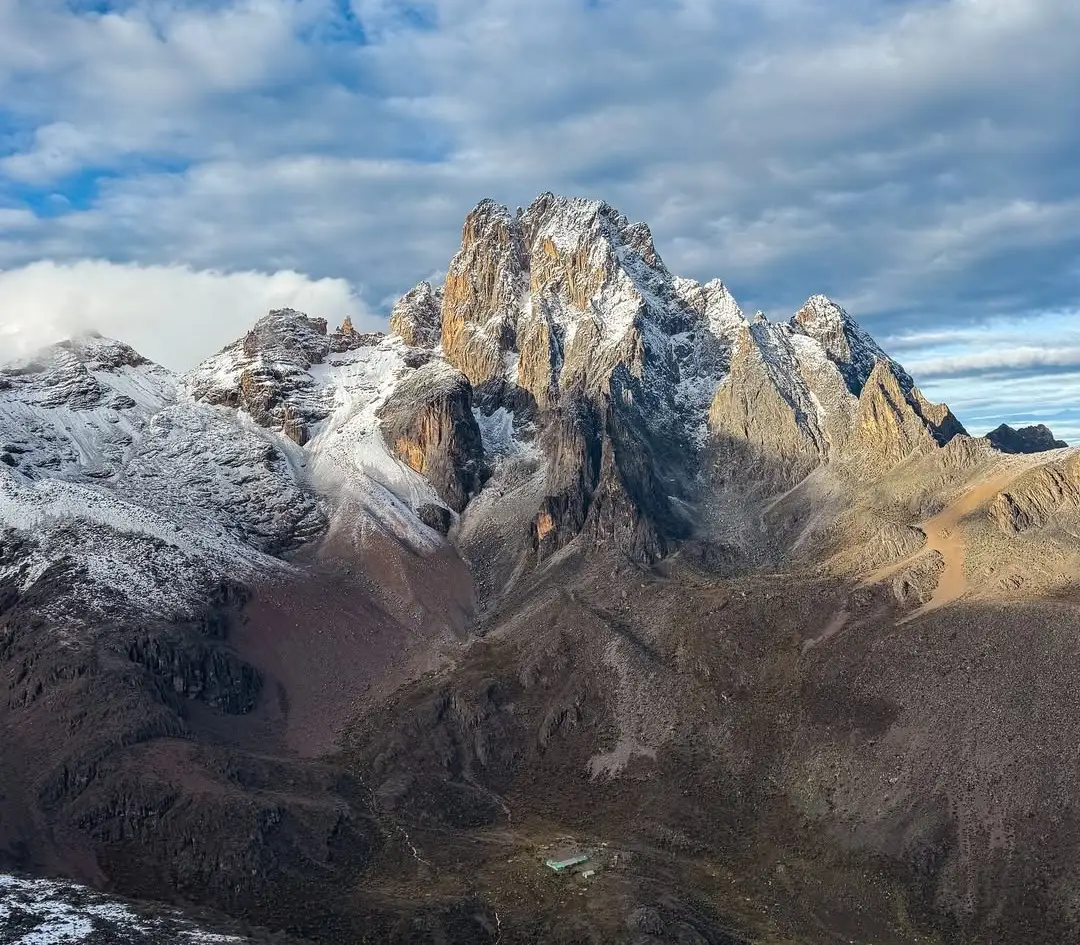
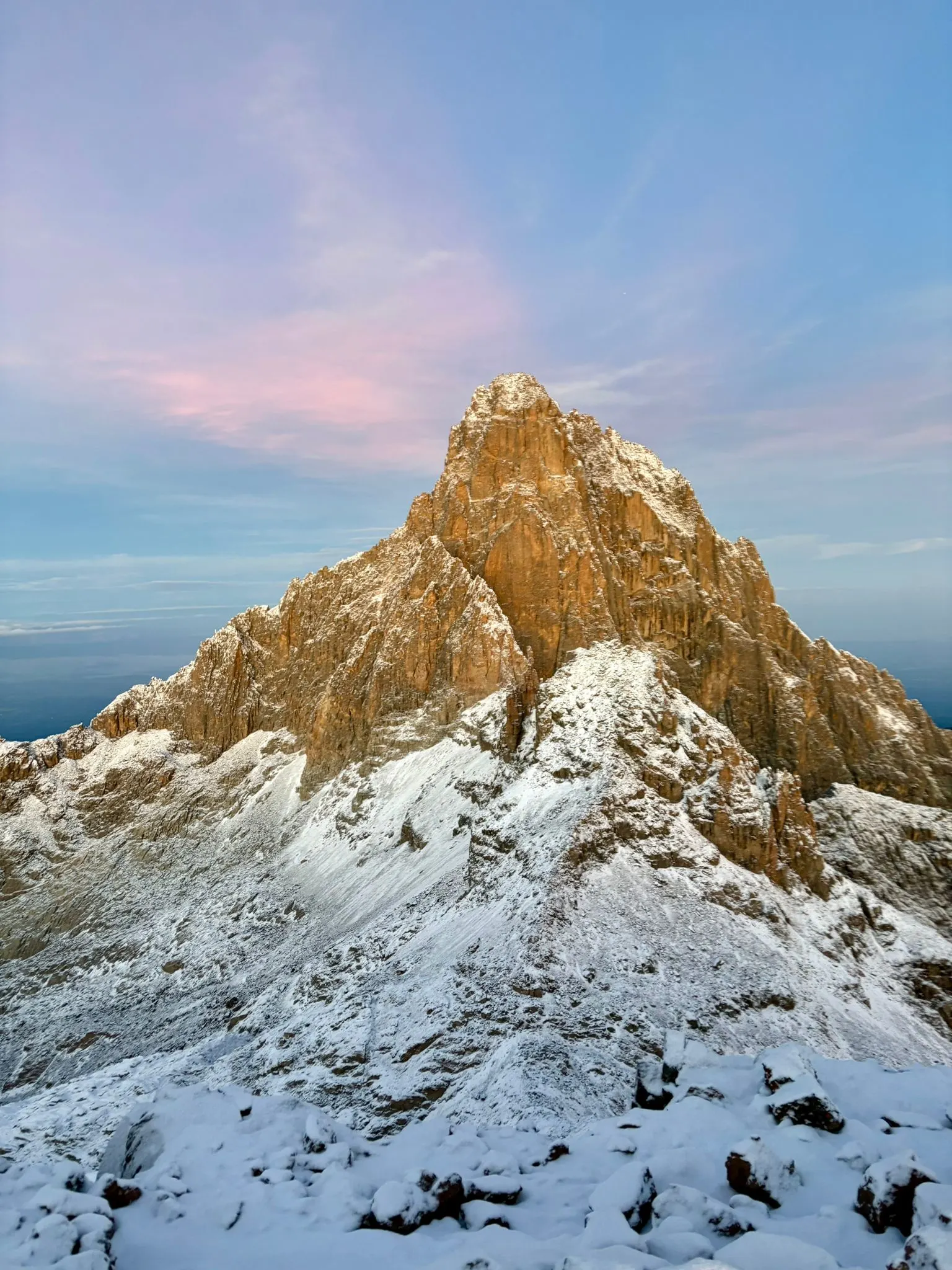
Mount Kenya National Park is positioned within Kenya's Central Highlands and was established in 1949 as a designated protected area to safeguard the country's highest mountain. The park encompasses the core peak areas and functions as a critical water catchment for much of Kenya, supplying fresh water to millions of people.
Overview
Name
Mount Kenya National Park
Type
Mountain
Town
Naro Moru
County
Nyeri
Country
Kenya
Mount Kenya National Park Geography and Location
The geographical presence of Mount Kenya defines the character of central Kenya. Its immense volcanic bulk creates a unique microclimate that stands in contrast to the surrounding savanna, forming a vital 'water tower' that feeds the nation's most important rivers. Understanding its location and physical attributes is the first step in planning a successful ascent.
Where Mount Kenya is Located
Mount Kenya is situated approximately 175 kilometres north-northeast of Nairobi and sits directly on the Equator. The mountain and its surrounding park are a dominant physical feature of the region, influencing local climate and hydrology. Primary access points for trekkers are the towns of Naro Moru on the western side and Chogoria on the eastern side.
Mount Kenya as the Second Highest Peak in Africa
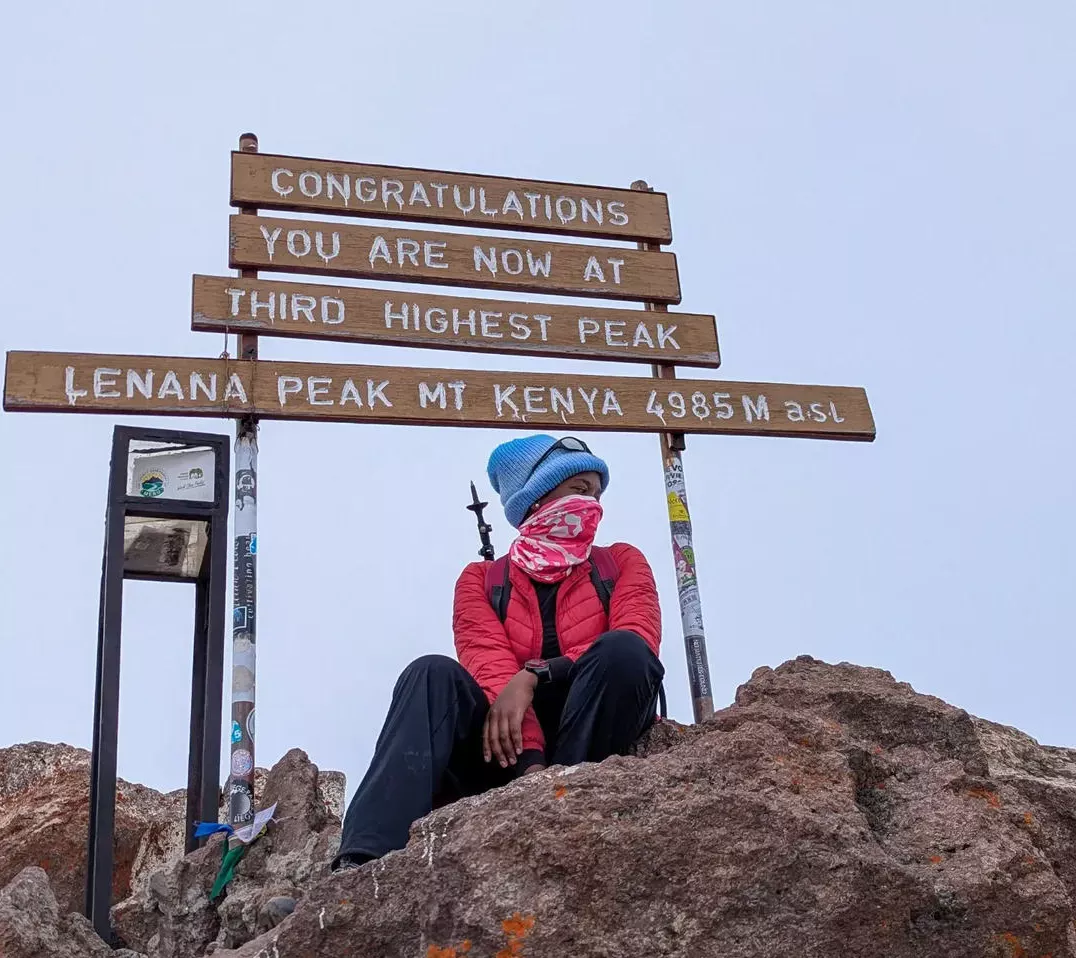
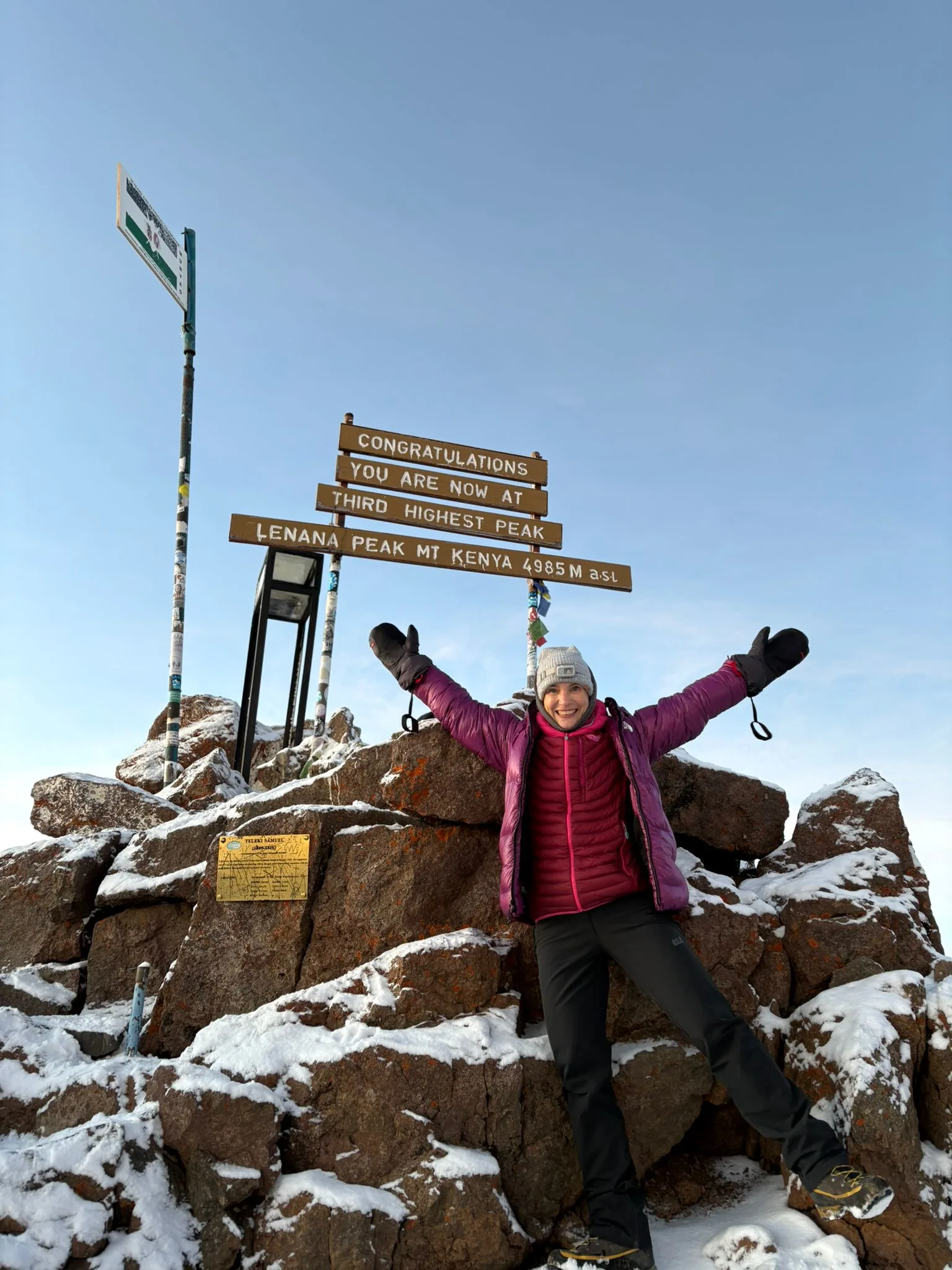
Mount Kenya is the second-highest mountain in Africa after Kilimanjaro, with its highest summit, Batian, standing at 5,199 metres. The main trekking peak, Point Lenana, reaches a significant 4,985 metres. The mountain is an extinct stratovolcano, and its jagged peaks are the dramatic result of extensive glacial erosion over millennia.
Mount Kenya a UNESCO World Heritage Site
The national park was inscribed as a UNESCO World Heritage Site in 1997. This status recognises its significant geological features, its role as a vital water tower, and its unique afro-alpine flora. UNESCO cited the site for its exceptional natural beauty and as an outstanding example of ecological processes in a high-altitude equatorial environment.
The trek up Mount Kenya is a journey through several distinct and dramatic ecological zones. As altitude increases, the environment transforms from dense forest to alien-like alpine vegetation, culminating in a world of rock and ice. Each zone offers a different set of challenges, flora, and fauna.
Mount Kenya's Rainforest and Bamboo Zones
The lower slopes of Mount Kenya, from approximately 2,000 to 2,500 metres, are characterised by montane forest. This area is home to elephants, buffalo, and various antelope and primate species, including the black-and-white colobus monkey. As altitude increases, this habitat gives way to a dense belt of bamboo, a preferred habitat for many mammal species. These lower zones are often wet and muddy due to consistent rainfall.
The Heath Moorland and Afro-Alpine Desert of Mount Kenya
Above the bamboo, the environment opens into a zone of heathland and chaparral, followed by expansive moorlands. This area is noted for its distinctive flora, including giant senecios (groundsels) and lobelias, which are adapted to the extreme diurnal temperature variations. Further up, this transitions into the sparse afro-alpine desert, a region of rock, thin soil, and hardy vegetation.
The Glacial and Rocky Summit Zone of Mount Kenya
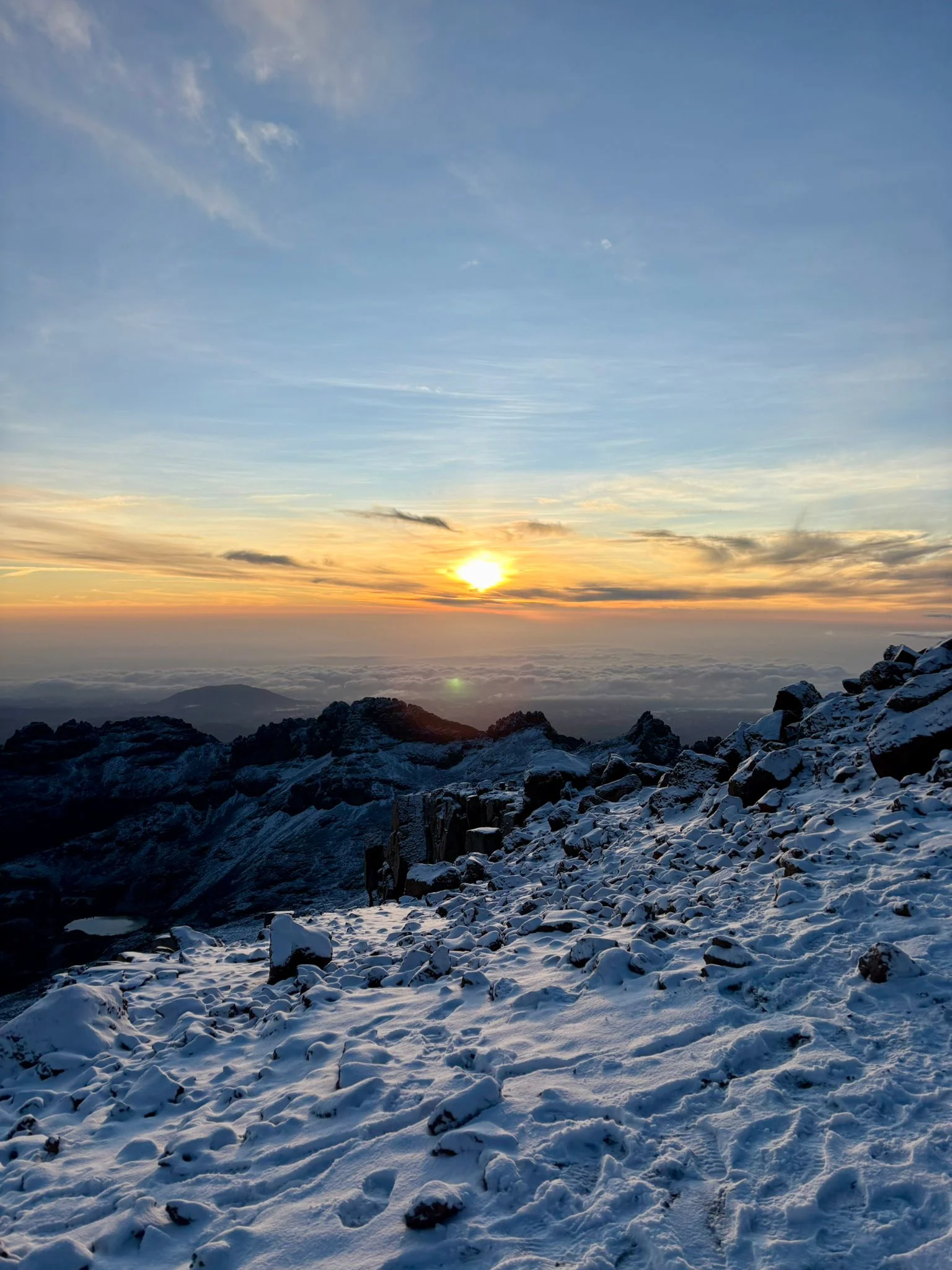
The highest zone consists of bare rock, ice, and several small, retreating glaciers. This area is above 4,500 metres and presents a stark, cold environment. The views from this altitude extend over the central Kenyan plains on clear days, offering a profound sense of scale. The physical contrast with the lower forested slopes is immediate and severe.
Routes to the Summit of Mount Kenya National Park
Several routes lead to the trekking summit of Point Lenana, each offering a different experience in terms of scenery, difficulty, and acclimatisation profile. The choice of route is a key part of planning a trek, with most groups ascending one way and descending another to appreciate the mountain's varied aspects.
Trekking the Sirimon Route on Mount Kenya
The Sirimon Route approaches the summit from the northwest and is generally considered the most gradual route. Its favourable acclimatisation profile helps to reduce the risk of altitude sickness. The route traverses drier terrain compared to other options and provides consistent, spectacular views of the main peaks during the ascent. A typical trek on this route takes 5 days.
The Naro Moru Route and its Vertical Bog
The Naro Moru Route is the shortest and steepest way to the summit from the west. Because of its directness, it is frequently used for descent. The route's most notable feature is the 'Vertical Bog,' a notoriously challenging section of wet moorland that becomes difficult to pass during and after rainy periods.
The Scenic Chogoria Route on Mount Kenya
Many trekkers consider the Chogoria Route from the east to be the most scenic. It passes impressive features like Lake Ellis, Lake Michaelson, and the Gorges Valley. The route is longer and requires a 4x4 vehicle for the final section of track to the park gate. It is a common choice for descent to maximise the visual variety of a trek.
Summiting Point Lenana on Mount Kenya Without Technical Climbing
Point Lenana, at 4,985 metres, is the mountain's third-highest peak and the primary objective for trekkers. Reaching this summit does not require technical rock climbing skills or equipment. The final ascent is a strenuous, pre-dawn walk on a steep scree and rock path. The higher peaks of Batian at 5,199 metres and Nelion at 5,188 metres are technical climbs reserved for experienced mountaineers with appropriate gear.
Accessing Mount Kenya National Park from Australia
The journey from Australia to the slopes of Mount Kenya is a significant international undertaking. It involves long-haul flights into Kenya's capital, Nairobi, followed by a multi-hour road transfer to the park gates. Careful planning is required to ensure a smooth transition from arrival in Kenya to the start of the trek.
Flights from Australia to Jomo Kenyatta International Airport Nairobi
Travel from Australia to Kenya is a long-haul journey. Flights depart from major Australian cities like Sydney, Melbourne, and Brisbane, typically involving a stopover in the Middle East (such as Doha or Dubai) or Asia. Total flight and transit time usually exceeds 20 hours to reach Jomo Kenyatta International Airport (NBO) in Nairobi.
Road Transfers to Mount Kenya Gates
From Nairobi, access to the park is by road. A private vehicle transfer is the standard practice and is usually arranged by trekking operators. The drive to the western gates (Sirimon, Naro Moru) takes approximately 3 to 4 hours on paved roads. The journey to the eastern Chogoria Gate takes 4 to 5 hours and includes a final section on a rough track requiring a 4x4 vehicle.
Best Time to Visit Mount Kenya for Trekking
The success of a Mount Kenya trek is heavily dependent on the weather. The climbing seasons are defined by the country's two dry seasons, which offer the highest probability of clear skies and safe trail conditions. Planning a trip during these periods is critical for both enjoyment and safety.
Mount Kenya Dry Seasons for Clear Views
The most reliable trekking conditions occur during the two dry seasons. January and February are generally warm and dry with clear skies. The second dry season, from late July through to September, is cooler but also offers stable weather. This period is a popular choice for climbing due to its favourable conditions.
Aligning a Mount Kenya Trek with Australian School Holidays
The August to September dry season aligns well with the winter and early spring school holidays in many parts of Australia. This timing makes it a practical option for families or educators to organise a combined trek and safari trip without conflicting with school terms.
Understanding Mount Kenya Wet Seasons to Avoid
Trekking during the two main rainy seasons is not recommended. The long rains from late March to May and the short rains in November result in hazardous conditions. Trails become extremely muddy and slippery, visibility is poor, and the risk of hypothermia increases significantly due to persistent damp and cold.
Why Trek Mount Kenya for a Unique African Adventure
Choosing Mount Kenya over other famous peaks offers a distinct and rewarding experience. It presents a serious high-altitude challenge but in a more remote and less commercialised setting, allowing for a deeper connection with the alpine environment.
The Challenging High-Altitude Adventure on Mount Kenya
A trek on Mount Kenya is a significant physical undertaking that requires a high level of fitness. The primary challenge is the altitude, which affects all trekkers to some degree. The pre-dawn summit attempt on Point Lenana is particularly demanding due to the combination of cold, darkness, and reduced oxygen levels.
Mount Kenya Versus Kilimanjaro A Less Crowded Choice
Mount Kenya receives substantially fewer visitors than Mount Kilimanjaro, which fosters a less commercialised and more remote trekking experience. The trails are quieter, providing a greater sense of solitude and connection with the mountain environment away from large crowds.
Practical Tips for Australians Visiting Mount Kenya
An Australian traveller preparing for a trip to Mount Kenya must manage several key practicalities. These include visa applications, health consultations, currency considerations, and packing the correct technical gear. Addressing these points well in advance is essential for a well-organised journey.
Kenya Visa Requirements for Australians
Australian passport holders require an Electronic Travel Authorisation (eTA) to enter Kenya. This must be applied for and approved online prior to departure via the official government portal. It is critical to complete this process well in advance of your travel dates to avoid any issues upon arrival.
Health Vaccinations and Malaria Prevention for Mount Kenya
A Yellow Fever vaccination certificate may be required for entry into Kenya, depending on your travel history. It is essential to consult a travel doctor in Australia at least 6 to 8 weeks before your trip. The doctor will advise on this and other recommended vaccinations, such as Hepatitis A, Typhoid, and Tetanus. While the mountain itself is too high for malaria transmission, the surrounding areas are not, so malaria prophylaxis is usually recommended.
Budgeting for a Mount Kenya Trip in AUD
Trek costs are almost always quoted in United States Dollars (USD). When budgeting, Australians must account for the current AUD to USD exchange rate. Travellers should also factor in additional costs for flights, insurance, the eTA, tips for the mountain crew, and any pre- or post-trek accommodation and activities.
Packing Essential Gear for Mount Kenya from Australia
Proper gear is critical for safety and comfort on the mountain. Key items to bring from Australia include:
Well-worn, waterproof hiking boots with good ankle support.
A layered clothing system: thermal base layers, fleece mid-layers, and a waterproof or windproof outer shell.
A warm hat (beanie), thermal gloves or mittens, and a neck gaiter or balaclava for summit night.
Sun protection: high-SPF sunscreen, quality sunglasses, and a wide-brimmed hat for lower altitudes.
A quality head torch with spare batteries, which is essential for the summit attempt.
A personal first-aid kit, including any personal medications, blister treatment, and pain relief.
Water bottles or a hydration bladder, and a personal water purification method like tablets or a filter.
Planning Your Mount Kenya Adventure from Australia
Organising a successful trip to Mount Kenya from Australia involves several logistical decisions. These include determining the overall trip duration, selecting a trustworthy local operator, and ensuring adequate emergency and medical coverage for a high-altitude expedition.
Typical Trip Length from Australia Including Safaris
To justify the long-haul travel from Australia, most visitors plan a trip of 2 to 3 weeks. A Mount Kenya trek typically takes 5 to 7 days. This is commonly combined with a 4 to 7-day wildlife safari in other Kenyan parks like the Maasai Mara or Amboseli National Park to create a comprehensive East African holiday.
Selecting a Reputable Mount Kenya Trekking Operator
Choosing a reliable and professional local operator is a critical safety decision. A reputable company will provide experienced and certified guides, porters, a cook, quality equipment like tents and a mess tent, and enforce strict safety protocols. This includes monitoring for altitude sickness and carrying emergency oxygen.
Emergency Preparedness on Mount Kenya and AMREF Flying Doctors
Comprehensive travel insurance is mandatory for this type of trip. Your policy must explicitly cover high-altitude trekking up to 5,000 metres and include emergency medical evacuation. Many operators recommend or require temporary membership with AMREF Flying Doctors, a leading air ambulance service in East Africa, for swift evacuation if needed.
Staying Safe and Well on Mount Kenya
Safety on Mount Kenya hinges on two primary factors: managing the effects of altitude and preparing for the severe, often freezing weather. A slow, steady approach to the ascent and carrying the right equipment are the best strategies for a safe and successful trek.
Acclimatisation and Altitude Sickness on Mount Kenya
Proper acclimatisation is the most important factor for a safe ascent. The guiding principle of trekking is 'pole pole', which is Swahili for 'slowly, slowly'. All sound itineraries should include gradual altitude gains and sometimes an extra acclimatisation day. Mild symptoms of Acute Mountain Sickness (AMS) are common; however, severe symptoms require immediate descent to a lower altitude.
Weather Conditions and Freezing Temperatures on Mount Kenya
The weather on Mount Kenya is highly variable and can change rapidly from sun to rain or snow in a matter of hours. Trekkers must be prepared for a wide range of temperatures. While daytime temperatures at lower altitudes can be pleasant, they drop significantly as you ascend. Night-time temperatures at high camps are consistently below freezing.
Mount Kenya National Park offers optimal conditions for trekking and high-altitude activities during its two distinct dry seasons: January to February and July to October. These months typically provide clearer skies, reduced rainfall, and more stable weather, essential for summit attempts and photography.